
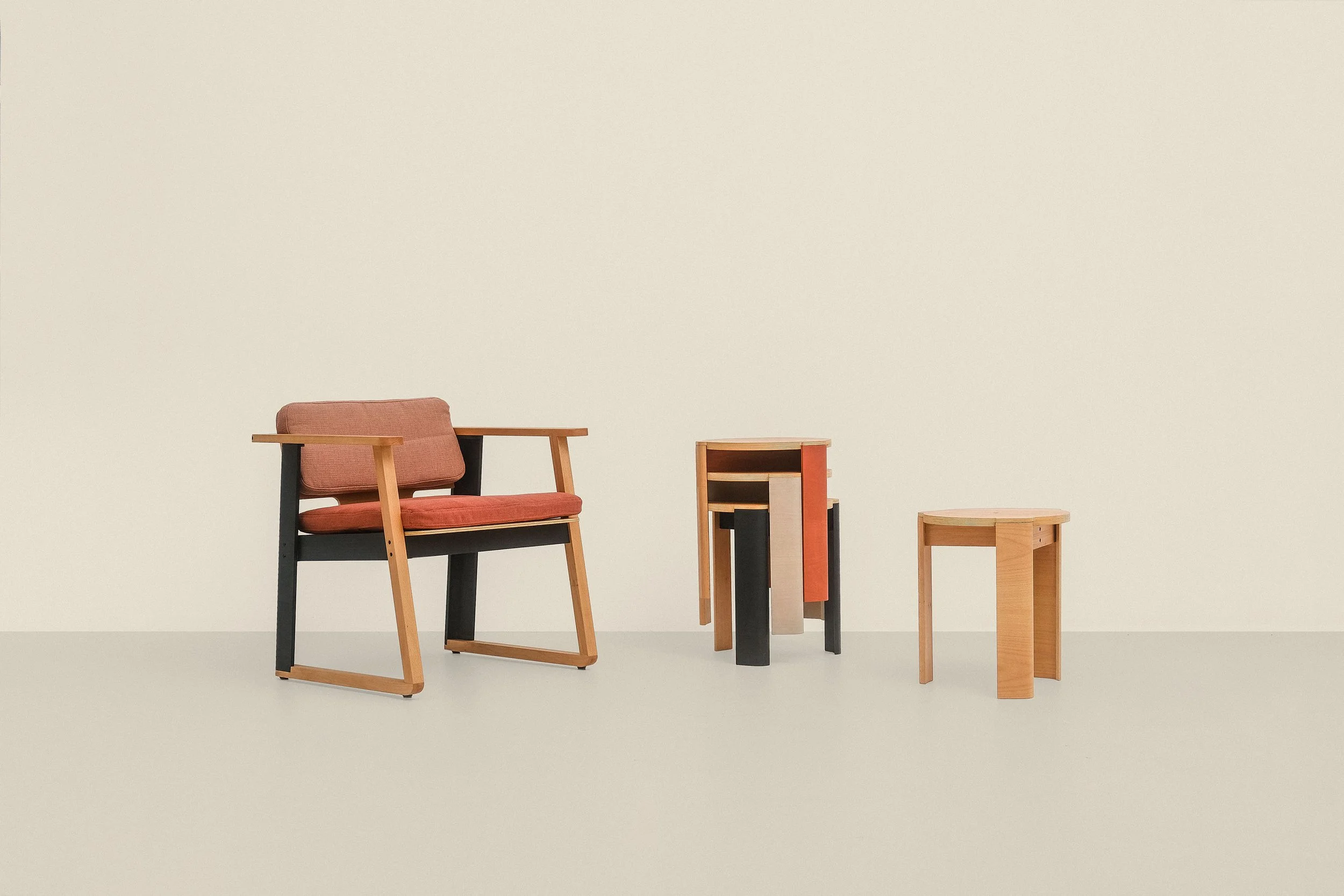
Modularity, local craftmanship and toxics avoidance for the upholstery
Project: Niu family (Niu 001 armchair and Niu 002 stool)
Client: SURU
Location: Barcelona (Spain)
Year: 2023
Materials: VOC-free beech wood, cushions upholstered in 100 % recycled PET fabric, filling of repurposed local sheep wool.
Keywords: Circular economy, modularity, repairability, local craftsmanship
Why?
Mainstream furniture often uses composite woods with formaldehyde adhesives, synthetic foam fillings and globalised production, resulting in high emissions, little repairability and eventual disposal problems. SURU’s Niu line responds to these issues by designing with health and planet in mind — choosing VOC-free solid materials, recyclable/upcycled textiles and local artisan production in the Barcelona metropolitan area, closing loops and extending life cycles.
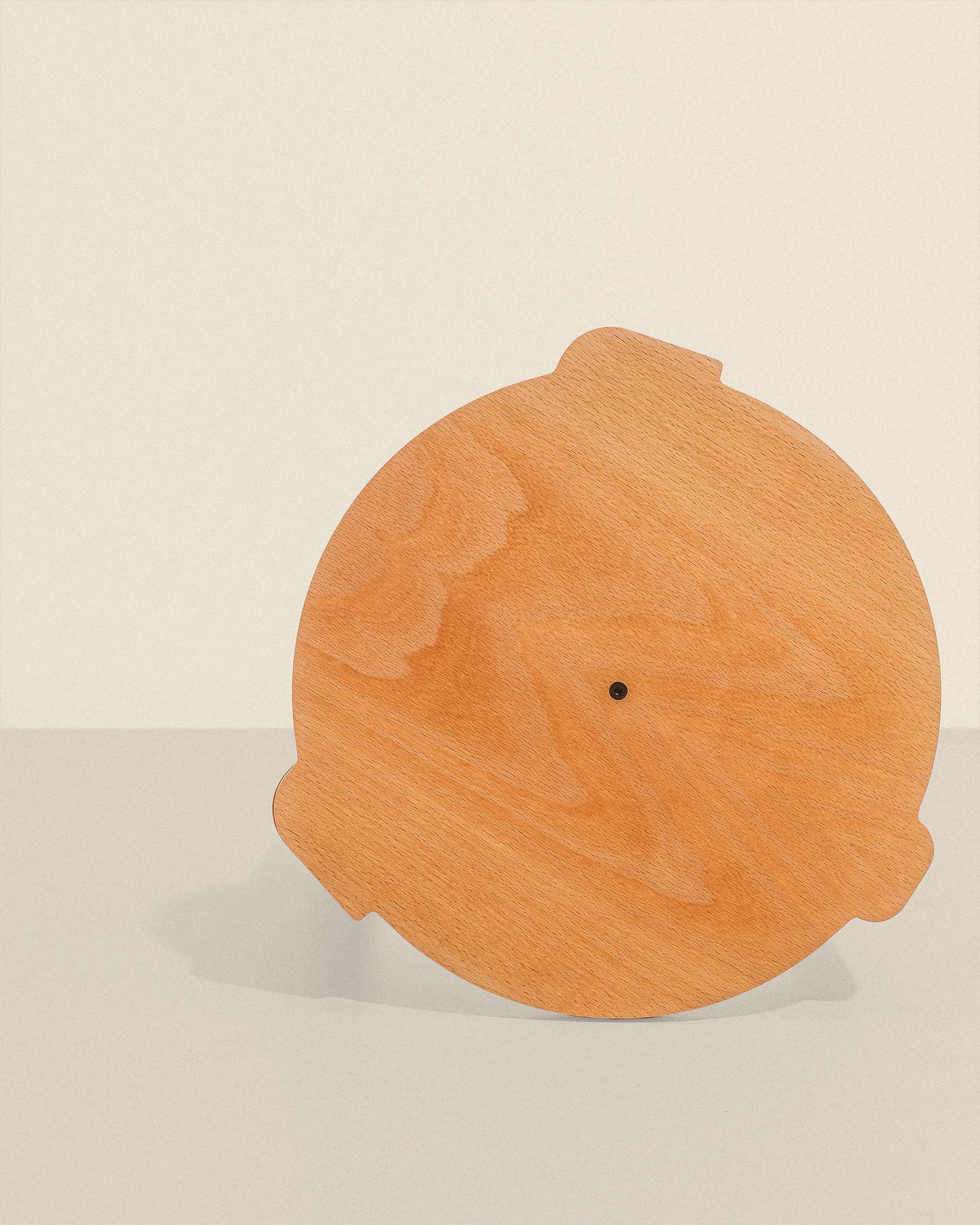
The NIU project demonstrates that it is possible to move away from high-impact, low-recyclability materials such as polyurethane foam, and to produce high-quality furniture using plywood made without formaldehyde.

What?
Niu Armchair 001 is a lounge chair designed to embody comfort and sustainability in one. The frame is made of VOC-free beech wood, treated with environmentally respectful varnishes. The cushions are upholstered in 100 % recycled PET fabric and filled with wool from local sheep — avoiding high-impact polyurethane foam. The design is modular, repairable, and shipped flat-pack to reduce logistic footprint. The product is crafted locally in Barcelona by a women-led carpentry collective and hand-upholstered in the Poblenou area.
How?
The production process emphasises local craftmanship and circular-design thinking:
The wooden frame is assembled by a women carpenters’ association in the La Verneda i La Pau neighbourhood of Barcelona — supporting local craftsmanship and inclusive employment.
The upholstery is done by hand in Barcelona’s Poblenou district, using the recycled-PET fabric and wool filling, ensuring each piece can be repaired, re-covered or refreshed rather than discarded.
The chair is delivered in flat-pack format, reducing shipping volume, and the modular design allows for replacement of components rather than replacement of the whole piece.
The materials are chosen to avoid formaldehyde and other high-emission adhesives—part of SURU’s commitment to healthy indoor environments.
