Digital Product Passports for rugs’ circularity
Project: Digital Product Passport
Client: Nanimarquina
Location: Barcelona (Spain)
Year: 2025 - 2026
Keywords: Digital Product Passport, DPP, ESPR, transparency, circularity
Why?
The textile industry faces significant sustainability challenges, particularly in relation to transparency, traceability, and end-of-life management. Rugs and carpets are especially difficult products to recover and recycle, with around 1.6 million tonnes landfilled or incinerated every year in the European Union. At the same time, upcoming European regulation is accelerating the need for more transparent and circular systems across the textile sector.
Driven by the Ecodesign for Sustainable Products Regulation (ESPR), the Digital Product Passport (DPP) is emerging as a transformative tool for sustainability, circularity, and communication. Beyond compliance, the DPP creates a direct connection between brands and users, transforming static product information into an interactive digital experience.
For nanimarquina, the DPP became an opportunity to reinforce its long-term commitment to product longevity. By providing validated information about materials, craftsmanship, environmental impact, care, and end-of-life guidance, the passport helps customers extend the lifespan of their rugs and make more informed decisions throughout the product’s life cycle.
What?
Nutcreatives collaborated with nanimarquina and Renoon to develop and implement a Digital Product Passport system tailored to the brand’s products, operations, and sustainability strategy.
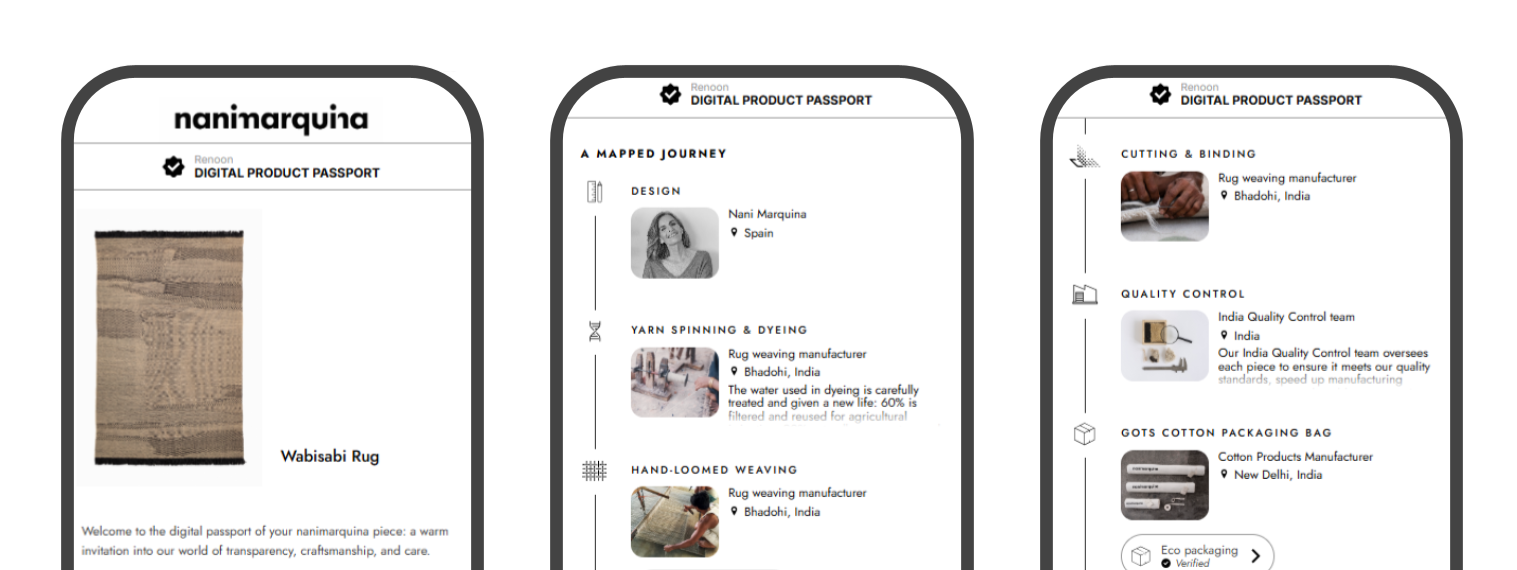
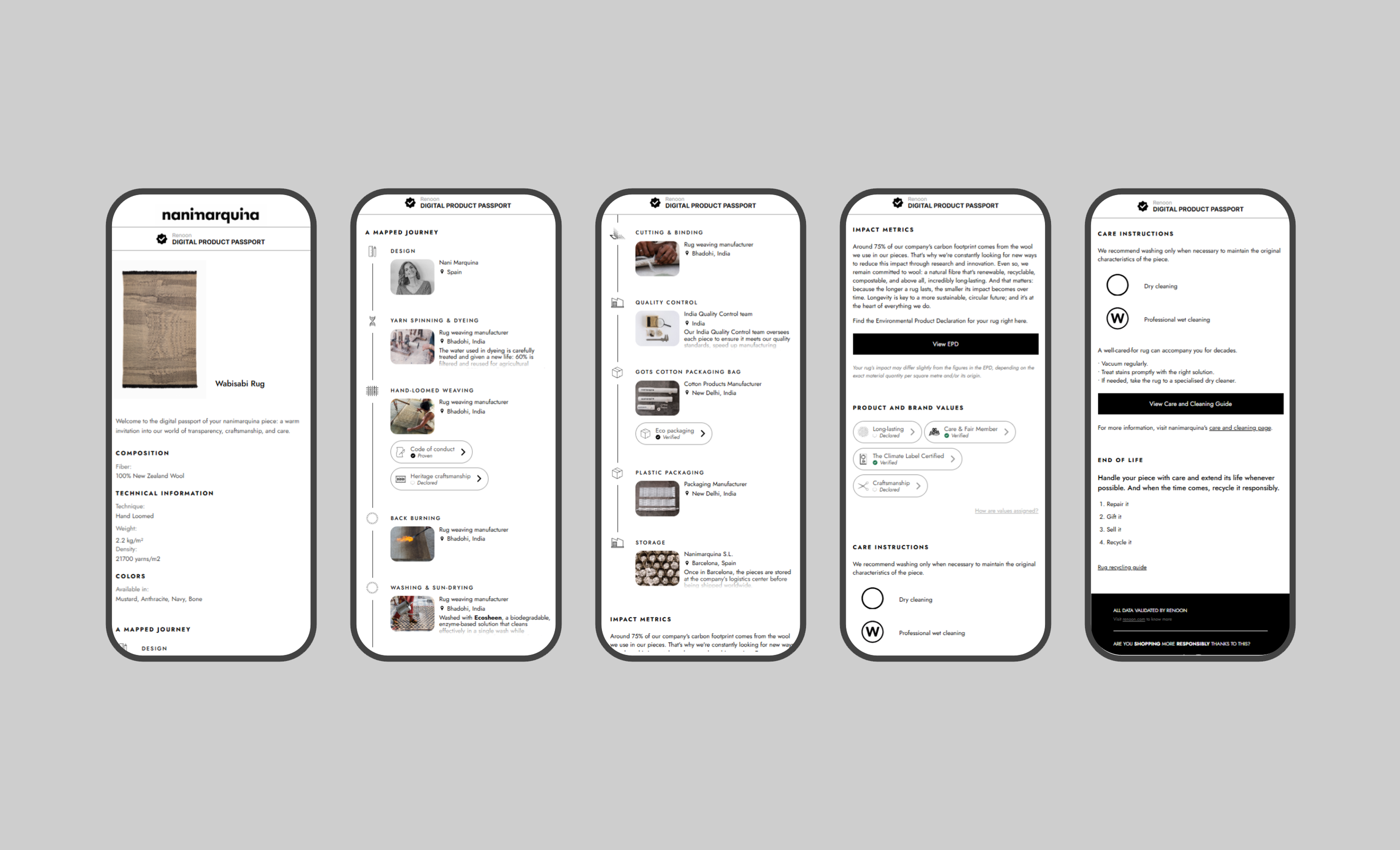
The Digital Product Passport provides access to detailed technical information, material composition, manufacturing processes, environmental impact metrics, care instructions, maintenance guidance, and end-of-life recommendations. It also includes supporting documentation and communicates the company’s sustainability values in a transparent and accessible way.
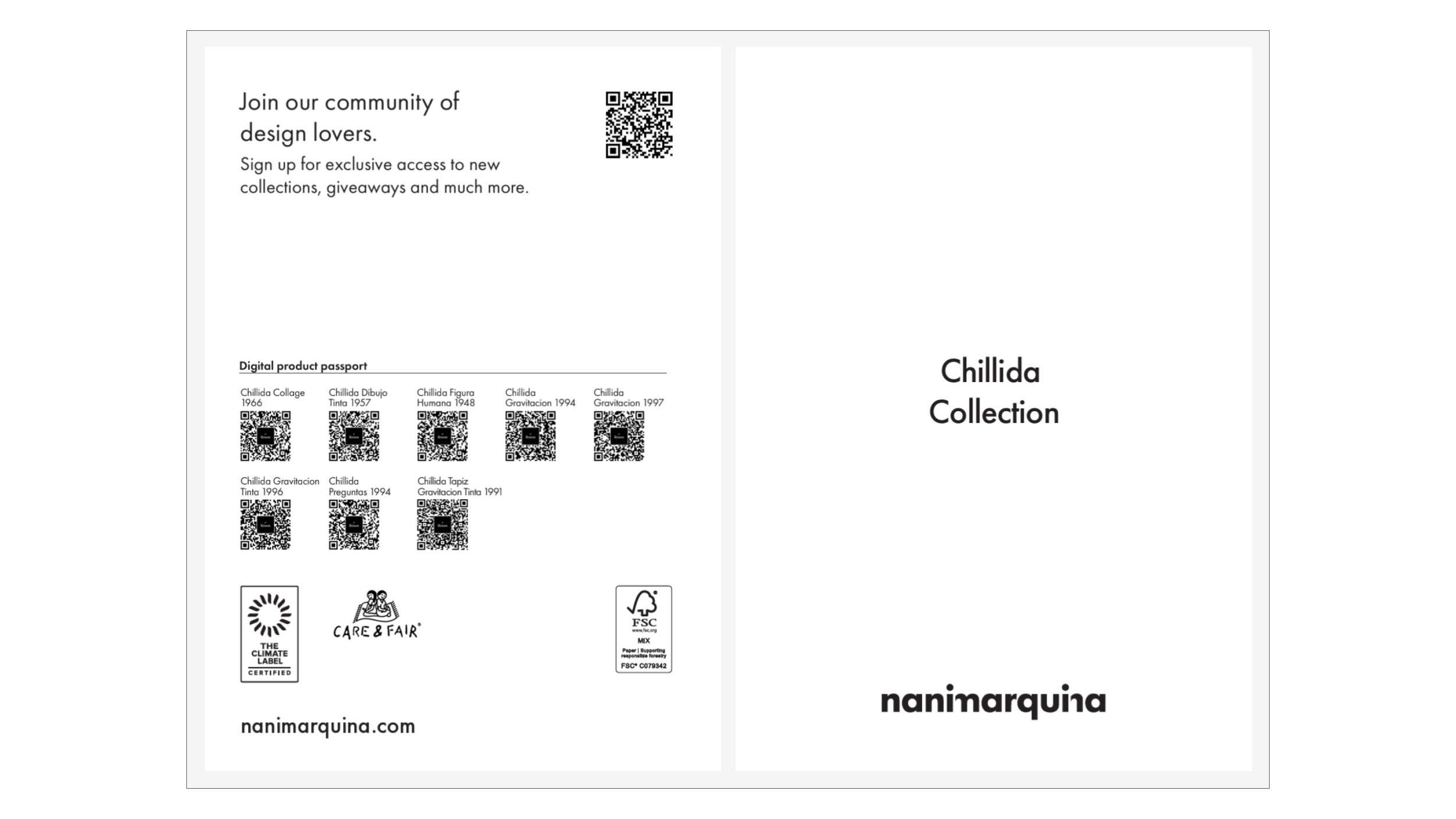
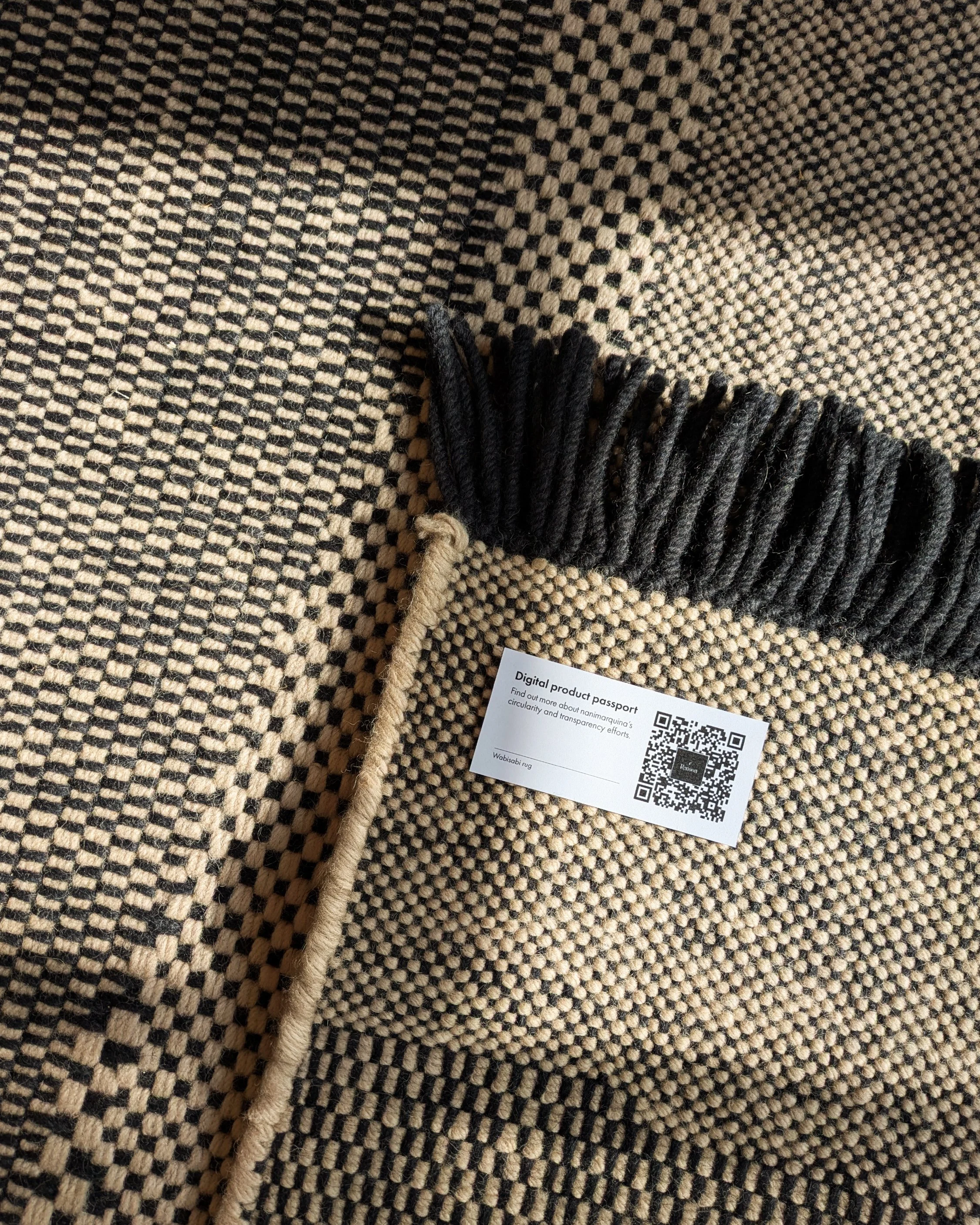
The DPP can be accessed directly through the product page, by scanning the QR code integrated on the back of the rug, or through the Certificate of Authenticity. More than a digital database, the passport was conceived as an extension of the product itself: a communication, traceability, and circularity tool designed to accompany the user throughout the rug’s expected 15–20 year lifespan.
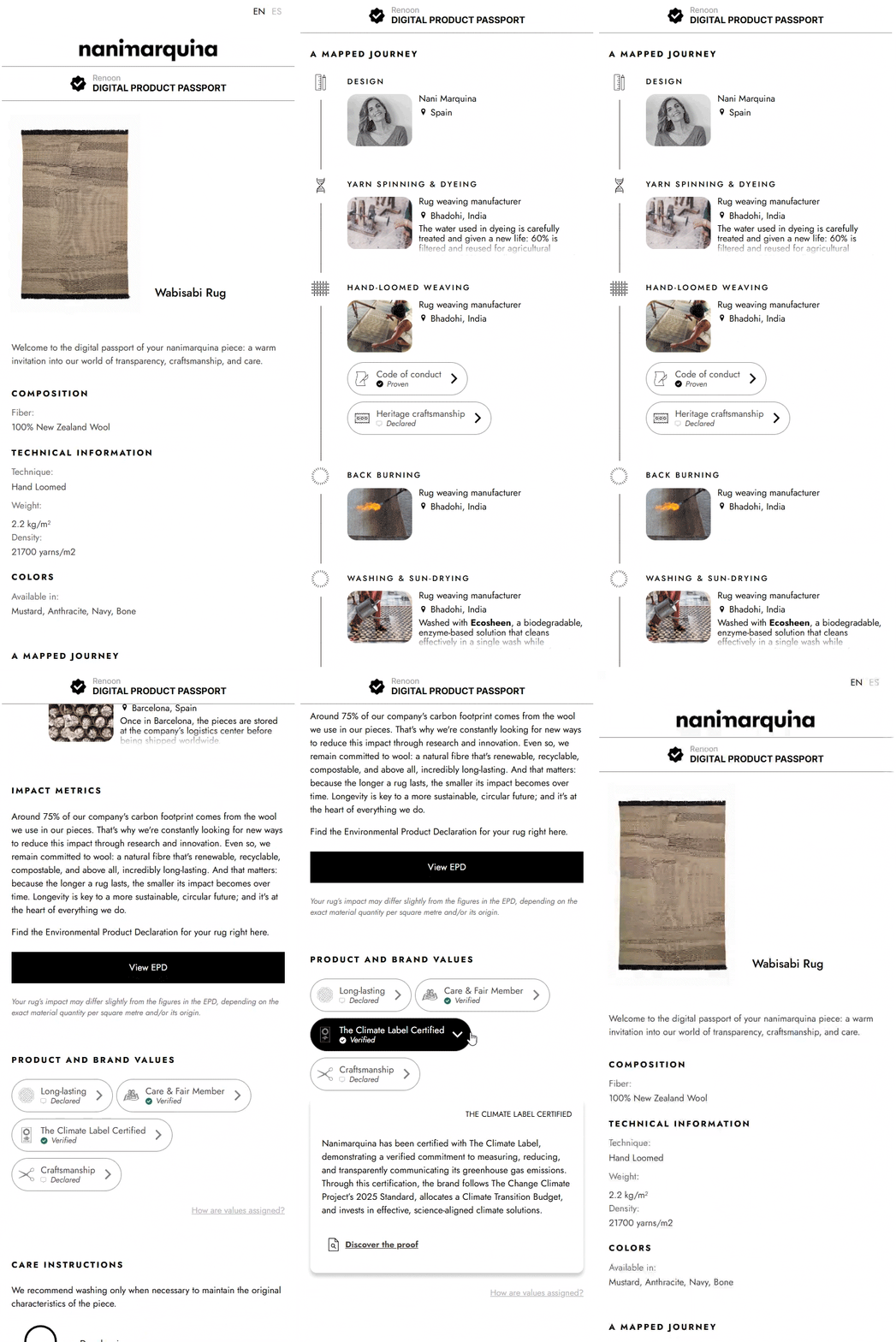
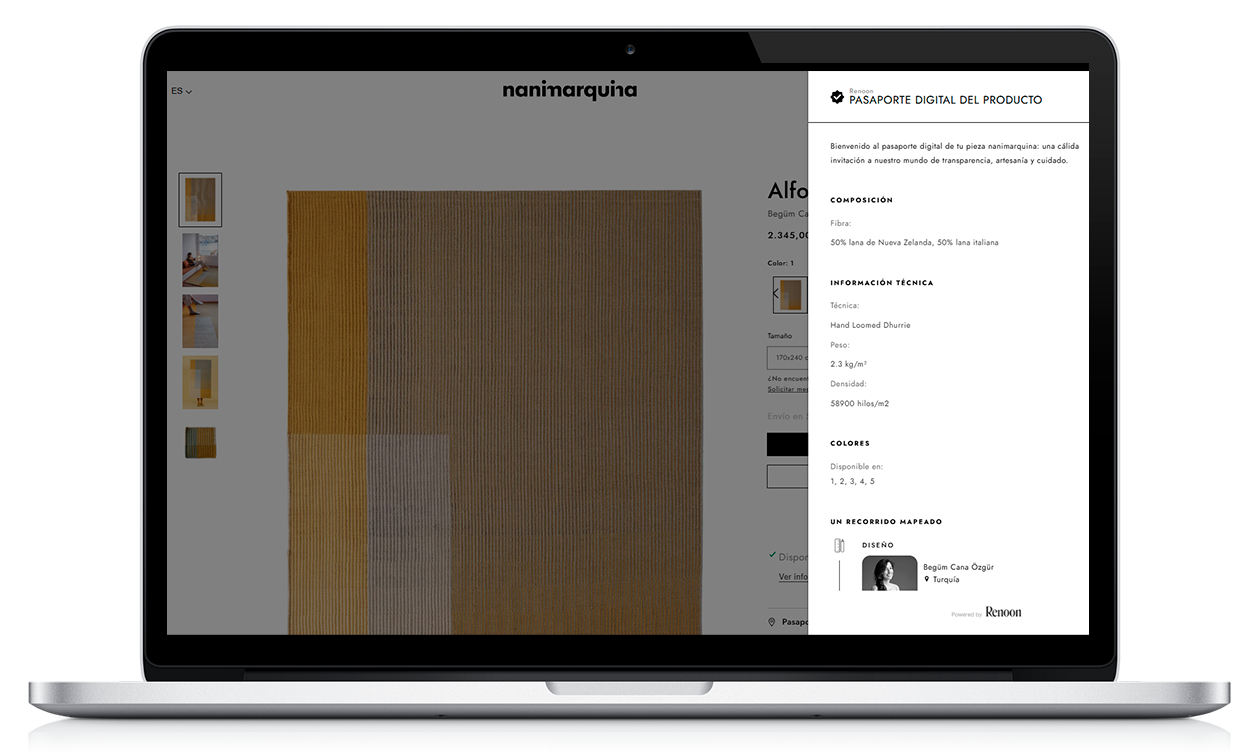
The Digital Product Passport is emerging as a powerful, direct-to-consumer channel that transforms the traditional, passive care label into an interactive, high-value digital experience

How?
Nutcreatives played a leading role in the design and implementation of the project, working across product and service design, user experience and traceability strategy. Our work focused on developing a realistic and scalable DPP model based on a deep understanding of nanimarquina’s operations, value chain, and sustainability objectives.
As long-term sustainability partners of the brand, we contributed expertise across the entire product lifecycle: from design and production to use and disposal phases. This holistic approach allowed the DPP to become not only a regulatory readiness initiative, but also a meaningful customer experience and circularity enabler.
The implementation process also required addressing operational and technical challenges, including the integration of physical QR codes into hand-made products and ensuring reliable traceability systems. By combining strategic thinking, sustainability expertise, and design-driven execution, the project transformed the DPP into a practical and valuable tool for both the company and its customers.